Expert Insight: “The HR function is at the heart of the AI-driven transformation”

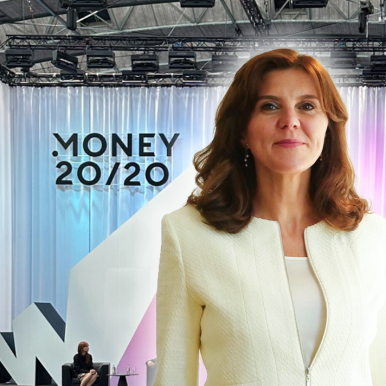
Frédéric Thoral, Human Resources Director at BNP Paribas Personal Finance, shares his vision of the role Human Resources plays in the company’s AI-driven transformation.
It reminds us of the mission of the HR function and how it fully plays its role in making AI not only a performance lever but also an accelerator for engagement, development, and trust.
Artificial intelligence is gradually transforming the way we work. It is giving rise to new uses, new tools and new interactions between employees and artificial technology. In this model, the human role does not disappear: it evolves towards more supervision, analysis, and discernment.
It is not just a technological or operational matter. At BNP Paribas Personal Finance, it invites us to rethink roles, strengthen skills and empower employees to play their full part in the transformation.
Anticipate, train and reassure
The mission of Human Resources is therefore to anticipate, train, reassure and create the conditions for sustainable adoption. It is not just about deploying tools, but about building a common AI culture: useful, responsible, practical and aligned with the company’s mission as well as with the expectations of its employees where resources are fully integrated into daily working.
In five years, AI will be invisible—fully integrated into our daily work—and what will make the difference will no longer be access to AI, but the way we know how to use it to create value as a BNP Paribas Personal Finance employee.
Today, the company already has a strong data culture, which supports the gradual integration of AI across business functions. However, the success of this transition depends above all on our ability to evolve our practices, management approaches and collective skills.
The 3 HR priorities at BNP Paribas Personal Finance
This evolution represents a major project for the HR function. Here are our three priorities:
1. Supporting the evolution of roles
From marketing to risk management, from legal to customer relations, AI is gradually transforming employees’ tasks, individual responsibilities, and our working methods. HR plays a key role in helping teams transition from an execution-based approach to one of enhanced supervision, analysis, and decision-making.
The AI tools already provided to the teams demonstrate the importance of an approach tailored to the needs of every business line. A legal expert, a developer or a team manager does not use AI in the same way. For HR, the challenge is therefore to support these uses as closely as possible to day-to-day operations, taking into account operational realities and the skills that need to be developed..
2. Supporting employees’ skills development
The customer relationship illustrates the transformation we are experiencing. AI enables a shift from a primarily transactional approach to a more personalized, conversational relationship.
Artificial intelligence offers tremendous opportunities for employees: this means fewer repetitive tasks and more added value in listening, board advice and support.
This evolution requires new relational, analytical and digital skills, as well as the ability to work with tools that enhance decision-making without replacing human judgment.
AI therefore requires HR to enable every employee to understand, use and shape AI—not alone, but collectively, as a team, and to strengthen the understanding of the opportunities offered by these technologies.
To accompany every employee in this transition, BNP Paribas Personal Finance has implemented the following initiatives:
- A digital, gamified, and multilingual generative AI onboarding program, accessible to all BNP Paribas Personal Finance employees in France and internationally.
- Targeted training to support the rollout of the BNP Paribas Group’s internal AI assistant, enabling every BNP Paribas Personal Finance employee to test and use AI in a secure environment.
- An AI Ambassador community present in each of our countries, whose role is not to be a technical AI expert but rather a business expert acting as a bridge between technical and business teams. These ambassadors play a crucial role in promoting and integrating AI technologies into our operations.
3. Supporting managers as their role evolves
AI must remain at the service of humans, within a controlled framework. It also becomes essential to strengthen soft skills — critical thinking, adaptability, cooperation, listening and discernment — to enable everyone to interact with these technologies in a responsible and value-creating way. This involves supporting managers in evolving their role, clarifying usage rules, securing practices, and maintaining a balance between efficiency, responsibility, and quality of work life.
Beyond the evolution of our ways of working, artificial intelligence offers an opportunity for BNP Paribas Personal Finance to accelerate our innovations, enhance our clients’ experience and strengthen our positioning as a technology-driven company.
It goes beyond efficiency: it unlocks new potential in each of us!
FAQ
What is the role of Human Resources in AI-driven transformation?
Human Resources (HR) is responsible for supporting the adoption of artificial intelligence within the company. Its role is to anticipate changes in job roles, develop employee skills, and create the conditions for responsible and sustainable AI use.
Why is AI also an HR issue?
AI does not just transform tools and processes—it reshapes job roles, required skills, and ways of working. HR plays a key role in preparing employees for these changes, supporting managers, and fostering team engagement in the transformation.
How is AI transforming jobs?
Artificial intelligence automates repetitive tasks, allowing employees to focus more on analysis, decision-making, advisory, and supervision. This shift affects many fields, including marketing, customer relations, risk management, IT, and legal services.
What are the main HR challenges related to AI?
The key challenges include:
- Upskilling employees to adapt to new demands,
- Supporting changes in work practices,
- Building trust in AI tools,
- Ensuring responsible AI use.
The goal is to enable everyone to leverage AI while maintaining a strong human dimension in their work.
What are BNP Paribas Personal Finance’s HR priorities regarding AI?
BNP Paribas Personal Finance focuses on three key priorities:
- Supporting the evolution of job roles,
- Developing employee skills,
- Helping managers adapt to their changing roles.
This approach aims to make AI not just a performance driver, but also a tool for professional development and engagement.
How does BNP Paribas Personal Finance train employees in AI?
The company has implemented several initiatives:
- A generative AI onboarding program accessible to all employees,
- Dedicated training on BNP Paribas Group’s AI tools,
- A network of AI Ambassadors across all countries where the company operates.
The objective is to enable everyone to understand, test, and use AI in a secure environment.
What is an AI Ambassador?
An AI Ambassador is a business-focused employee who bridges the gap between technical and operational teams. Their role is to: encourage the adoption of new tools, help colleagues identify relevant AI use cases, share best practices,
Will AI replace employees?
BNP Paribas Personal Finance’s vision is that AI does not replace employees—it transforms their roles. Human skills such as critical thinking, judgment, active listening, creativity, and collaboration become even more valuable in an AI-augmented work environment.
How is AI transforming customer relations?
AI enables more personalized and conversational interactions. By automating administrative and repetitive tasks, it frees up time for teams to better support, advise, and meet customer needs in a more meaningful way.
What is the role of managers in an AI-augmented workplace?
Managers play a crucial role in driving change by:
- Helping teams adopt new tools,
- Clarifying usage guidelines,
- Encouraging skill development,
- Balancing performance, responsibility, and work-life quality.
Which skills are becoming essential with AI?
While technical skills remain important, human skills are gaining even more value, including: critical thinking, adaptability, collaboration, analytical skills, active listening, judgment and discernment.
What will AI usage look like in five years?
According to BNP Paribas Personal Finance, AI will become seamlessly integrated into daily work, to the point of being nearly invisible. The focus will shift from accessing tools to using them effectivelyto create value for customers, teams, and the company.
Why does BNP Paribas Personal Finance see AI as an opportunity?
Artificial intelligence accelerates innovation, enhances customer experience, and boosts company performance. Beyond efficiency gains, it also provides opportunities to develop new skills and unlock employee potential.