February 2025 Mobility & Consumption Minute: who pays for public transport as organic food returns to growth?

Every month, the Mobility Minute and the Consumption Minute explore two major trends transforming consumer behaviour in France and across Europe.
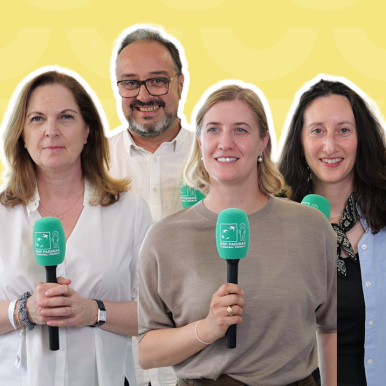
Presented by Flavien Neuvy, economist and Director of the Cetelem Observatory, these two analyses provide a one-minute overview of the developments shaping the mobility and consumer markets.
In February 2025, two markets illustrate very different ways of financing change:
- Public transport users cover only 15% to 20% of the actual cost of the service
- France’s organic food market is returning to growth after several difficult years
Mobility Minute: public transport is around 80% collectively funded
Public transport accounts for around 12% of commuting journeys in France.
To make these networks more competitive and attractive, investment has doubled over the past fifteen years, rising from around €11 billion to more than €22 billion per year.
But the fare paid by passengers covers only a small proportion of the actual cost.
Users finance just 15% to 20% of the service, with the remainder funded through taxes and other public contributions.
What you need to know
– public transport accounts for 12% of commuting journeys in France;
– annual investment has risen from around €11 billion to more than €22 billion in fifteen years;
– Toulouse Metro’s Line C alone represents an investment of more than €3 billion;
– passengers cover only 15% to 20% of the actual cost of public transport;
– the remainder is financed through taxation and specific contributions, including the versement mobilité paid by employers.
To understand why collective funding is the norm for public transport and what this means for the mobility transition:
? Discover the full analysis on the Cetelem Observatory
Find out about the latest Auto 2025 study by l’Observatoire Cetelem
In 2011, l’Observatoire Cetelem de l’Automobile took an interest in the under-30s, then called the “Generation Y”.
Nearly 15 years later, it looks at Generation Z, who succeeded them, in a new study that evaluates their relationship with the automobile in a context of market downturn, slowing inflation and debates on the transition to electric.
Carried out in 14 countries, among 16,000 people, the study by l’Observatoire de l’Auto 2025 is rich in lessons.
Consumption Minute: France’s organic food market returns to growth
Between 2014 and 2020, France’s organic food market expanded rapidly.
Its value multiplied by 2.5, increasing from around €5 billion to almost €13 billion.
Then came the economic downturn and sharp increases in food prices.
Households were forced to make new trade-offs in their spending, and organic products were particularly affected.
After stabilising in 2023, the market returned to growth in 2024, increasing by around 2%.
What you need to know
– the organic food market multiplied by 2.5 between 2014 and 2020, rising from €5 billion to almost €13 billion;
– the market declined significantly from 2021 onwards as food prices increased;
– activity stabilised in 2023;
– the market returned to growth of around 2% in 2024;
– organic farmland accounts for 10.5% of France’s total agricultural land.
To understand why organic food was more affected than some other forms of values-driven consumption:
? Discover the full analysis on the Cetelem Observatory
Find out about l’Observatoire Cetelem new 2025 consumer study
In 2023, the Cetelem Consumer Observatory took an interest in the low-cost market and its extension. Today, we look at the evolution of consumption in France, which is very different from that of a few years ago. If you want to dig a little deeper into the subject, discover the complete European study by the Cetelem Observatory on consumption in 2025
Two markets, two ways of paying for the transition
On one side is a public service where around 80% of the cost is funded collectively.
On the other is a consumer product where the additional cost of choosing organic is borne directly by the individual household.
The contrast is revealing.
When the cost of a transition falls directly on household budgets, adoption can decline rapidly when purchasing power comes under pressure. When the cost is shared collectively, change can continue despite those pressures.
FAQ – February 2025 Mobility & Consumption Minute
- What proportion of commuting journeys in France are made by public transport?
Around 12% of journeys between home and work in France are made using public transport. - How much does France invest in public transport?
Annual investment exceeds €22 billion, compared with around €11 billion fifteen years ago. - What share of public transport costs is paid by passengers?
Passengers cover only around 15% to 20% of the actual cost of the service. The remainder is financed through taxation and other contributions, including the versement mobilité. - How is France’s organic food market performing?
After strong growth up to 2020 followed by several years of decline, the market stabilised in 2023 and returned to growth of around 2% in 2024. - What proportion of French agricultural land is organic?
Organic farming accounts for around 10.5% of France’s total agricultural land. - Where can the full analyses be found?
Both analyses are available on the Cetelem Observatory website, respectively in its Automotive and Consumption sections.